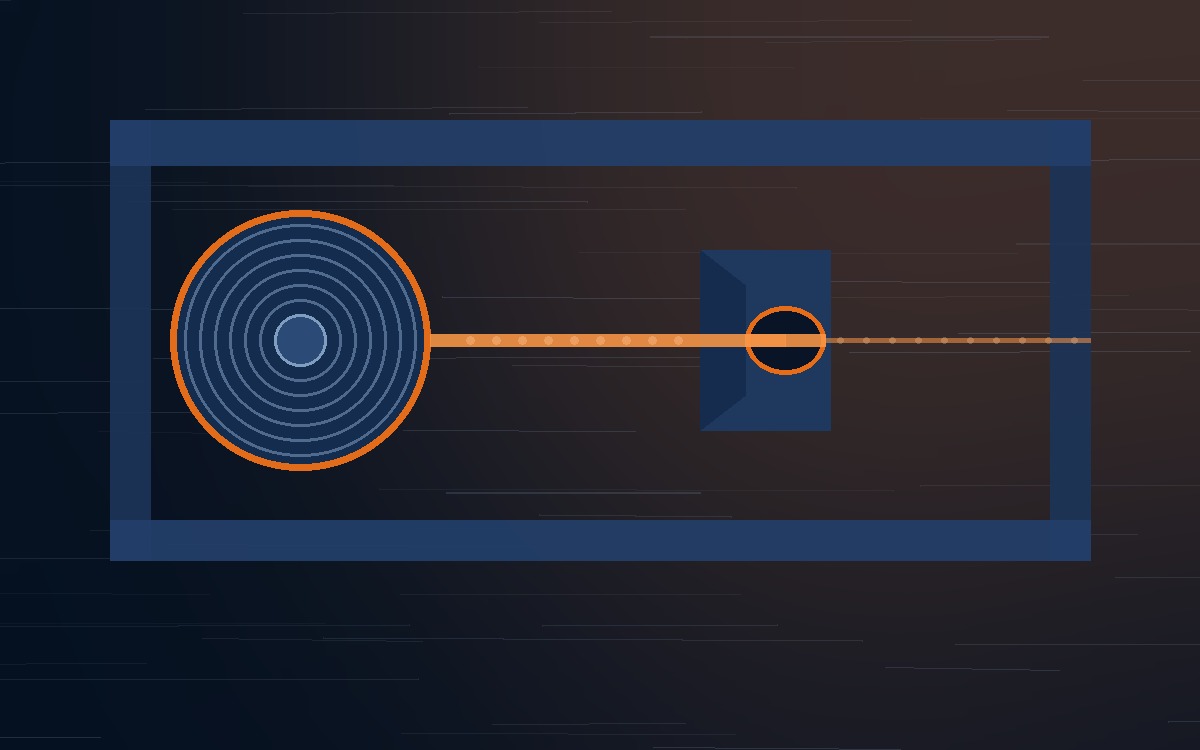
In wire drawing, dimensional accuracy, surface quality and process stability are the three factors that decide competitiveness on a production line. Tungsten carbide dies have become the industry benchmark for these three criteria because they combine durability, precision and cost efficiency.
What is a tungsten carbide die?
A tungsten carbide die is made from fine-grain tungsten carbide powder with an optimised cobalt binder. The combination produces a balance between hardness and toughness: high hardness guarantees resistance to wear and deformation, while sufficient toughness prevents brittle failure under the shock loads encountered in drawing. Hardness of these dies is typically reported in the range of 1600 to 2100 HV30.
Key technical advantages
- Longer die life: resistance to wear and high-pressure conditions reduces line stoppages and maintenance cost.
- Stable dimensional precision: the reduction angle and profile stay within tolerance over the die life, so diameter drift is contained.
- Better surface finish: ground and mirror-polished bearing surfaces produce round, uniform wire with controlled roughness.
- Better lubricant retention: a uniform die geometry keeps the lubricant film stable and lowers friction.
Taper inserts and pressure nibs
Alongside the main die, taper inserts are engineered for demanding applications: drawing low-carbon and high-carbon steel wires, stainless steel wires, MIG and TIG welding wires, spring wires and fastener wire at higher speeds. Pressure nibs optimise lubricant flow and reduce friction, delivering a superior wire surface finish, tighter dimensional control and greater process stability during high-speed drawing.
Application range
Tungsten carbide dies are supplied in a size range of 0.5 mm to 50 mm and are used extensively for construction wires, power and infrastructure cables, armouring applications, tyre cord wires and specialty alloy wire manufacturing.
Die profile: four working zones
Every drawing die has four distinct zones: the entrance, which guides lubricant and wire; the approach (reduction) cone, typically 12–18°, which reduces the diameter; the bearing, which fixes the final size and runs about 30–50 % of wire diameter in length; and the back relief, which prevents excess friction and breakage. Too open an approach angle raises drawing force; too tight an angle scrapes lubricant away and accelerates wear.
Carbide grade and cobalt content
Tungsten carbide is sintered with cobalt as the binder phase, and cobalt content sets the hardness–toughness balance. A 6 % Co submicron grade at about 90–91 HRA gives high wear resistance for fine wire and high speed; 10 % suits general drawing and 15 % is chosen for large diameters and shock loads. HIP sintering minimises porosity and reduces internal cracking.
Reconditioning and die economics
A worn die is not scrapped: polishing and resizing restore the bearing, and a die typically yields three to six working lives. Careful handling — no impact, accurate alignment with the drawing axis and adequate cooling — multiplies life, whereas misalignment and overload produce radial cracks and early failure.
Comparison with diamond dies
Below about 0.2 mm, diamond dies (single crystal or polycrystalline) take over: wear is five to ten times lower and diameter is held to a tighter tolerance, but the price is twenty to forty times that of carbide. Between 0.2 and 12 mm, tungsten carbide delivers the best life-to-cost ratio, which is why more than 90 % of industrial dies are carbide. The final choice should be made on die cost per tonne of drawn wire, not on purchase price.
Conclusion
Higher productivity, drawing process consistency and extended die life make tungsten carbide dies a strategically essential solution for modern wire and cable manufacturing. For producers focused on surface quality and dimensional stability, these dies typically pay for themselves within a short payback period.
Source: Wire & Cable India
Pingback: CO2 Welding Wire: Complete Guide to MIG/MAG Welding - MIG/MAG | تولیدکننده سیم جوش و مفتول فولادی