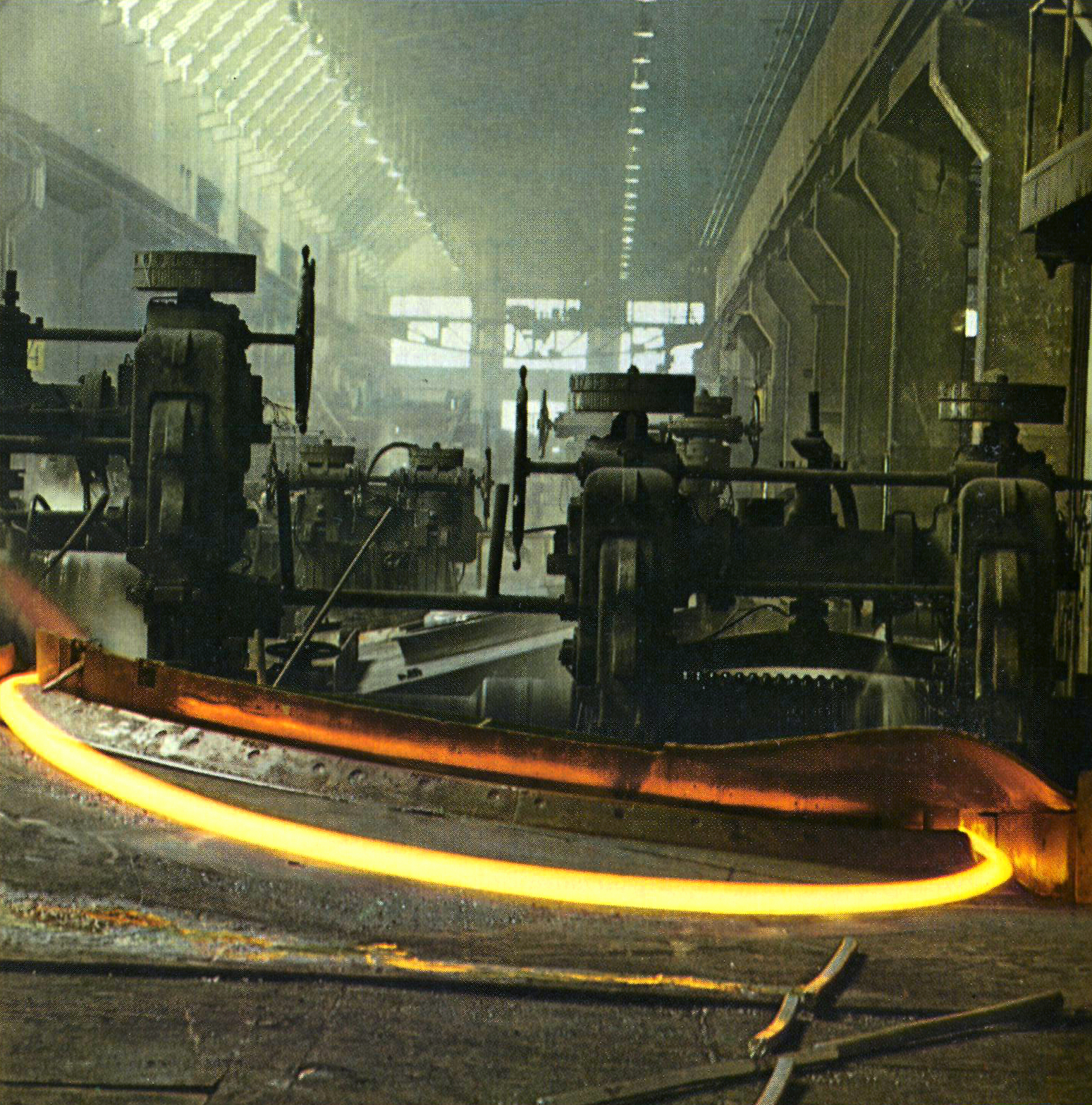
The iron wire industry turns steel billet into versatile wire products, from rebar tying wire on a construction site to agricultural fencing and bridge stay cables. It sits at the intersection of steelmaking, pickling, cold drawing and coating, and the quality of each step sets the quality of the next.
Production chain
- Wire rod production: billets are hot-rolled into 5.5–14 mm rod.
- Pickling: mill scale and rust are removed with HCl or H2SO4 plus an inhibitor.
- Base coating: phosphate, borax or lime carries lubricant into the die.
- Cold drawing: multi-pass reduction sets diameter and strength.
- Annealing: batch or in-line, to restore ductility.
- Surface finishing: hot-dip or electro galvanising, PVC coating, or bright finish.
Where pickling and phosphating fit
Pickling dissolves the rolled oxide scale and activates the surface for the following steps; if acid residue carries into the next bath, the coating becomes patchy and subsurface corrosion starts, which is why a second rinse and pH control are essential. Phosphating builds a porous crystalline layer that retains lubricant and reduces die wear in heavy reductions.
Products and applications
- Black annealed wire: soft and flexible for tying and bundling.
- Galvanised wire: zinc coated for humid and outdoor service.
- Rebar tying wire: the highest-volume site product.
- Barbed wire and chain-link: security and boundary fencing.
- Welded mesh: concrete reinforcement and screening.
- Nail and staple wire: feedstock for the fastener industry.
Standards and galvanising
ASTM A510 and ISO 16120 define wire rod requirements, ASTM A641 and EN 10244-2 set zinc coating classes, and ASTM A975 covers hexagonal mesh. Hot-dip galvanising at about 450 °C gives a thicker, better-bonded coating than electroplating and is the first choice for corrosive environments; coating mass is typically reported between 40 and 300 g/m².
Environment, energy and technology trends
Pickling effluent and phosphating sludge are the two main environmental challenges, and acid regeneration plus reduced zinc consumption are the focus of new investment. On the technology side, drawing speeds now exceed 25 m/s, on-line diameter and annealing temperature control is standard, and data-driven line monitoring predicts wire breakage before it happens.
Quality control and testing
Tensile testing establishes strength and elongation, the torsion test reveals surface cracks, the wrap test checks coating adhesion, and the weight-loss method measures zinc coating mass. Corrosion resistance is assessed in salt spray over 24 to 720 hours. On-line laser diameter gauging with continuous logging of drawing speed and annealing temperature provides the traceability data for every coil.
Packaging and shipping
Coils are supplied from about 25 to 1000 kg; for export, VCI paper and a moisture barrier prevent rusting on the sea leg. Strapping, timber pallets and correct container loading protect against coil deformation and coating damage in handling.
Energy and operating cost
Drawing and annealing dominate electricity use: a typical plant consumes roughly 400–700 kWh per tonne of drawn wire, with annealing the largest single load. In-line annealing and waste-heat recovery cut this materially, and variable-speed drives on the drawing blocks reduce idling losses. Zinc consumption in galvanising and acid make-up in pickling can add more than 15 % to conversion cost — which is why predictive maintenance and acid regeneration usually pay back faster than energy projects.
Trade and export
Pricing depends on three variables: diameter and tolerance, zinc coating class and packaging type. In export, freight is a large share of landed cost, which favours dense high-weight coils; EU compliance with EN 10244-2 coating classes and material certificates must be verified before loading.
Summary
Profitability in this industry rests on three factors: incoming rod quality, tight control of pickling and drawing, and a coating matched to the service environment. For the base grades see low carbon steel wire and high carbon steel wire.